
- 1. Do Small Businesses Really Need a Website Today?
- 2. How Customers Search for Businesses Before They Buy
- 3. Why Every Small Business Needs a Website
- 4. What Happens When a Small Business Doesn't Have a Website?
- 5. Is Social Media Alone Enough for a Small Business?
- 6. What Information Should Every Small Business Website Include?
- 7. Two Similar Businesses, Different Results
- 8. Signs Your Small Business Needs a Website Right Now
- 9. Frequently Asked Questions
- 10. Conclusion
You post regularly on Instagram. You reply to customers on WhatsApp. Business feels like it's moving. So the question naturally comes up — do you actually need a website too?
The honest answer is yes, and not just because everyone says so. There are real, practical reasons why businesses without websites consistently lose customers to competitors who have them. This post walks through what those reasons are, what you're missing without a website, and what a good one should actually include.
1. Do Small Businesses Really Need a Website Today?
Yes — more than ever.
The way customers find and evaluate businesses has shifted. Before someone walks into your shop, calls your number, or sends you a message, there's a good chance they've already looked you up online. They want to know if you're legitimate, what you offer, and whether others have had good experiences with you.
A social media page can answer some of those questions. But for a lot of customers, it's not enough. They expect a website, and if they can't find one, they'll move on to someone who has one.
2. How Customers Search for Businesses Before They Buy
People Google Businesses Before Contacting Them
When someone needs a service — a plumber, a tailor, a bakery, a tutor — the first thing most of them do is search Google. Not Instagram. Not Facebook. Google.
If your business doesn't show up in those results, or shows up without a proper website, you're invisible to a huge chunk of people who were ready to buy. Social media profiles do sometimes appear in Google results, but they rarely give customers the depth of information they're looking for.
Customers Want Information Available Anytime
A customer might want to know your pricing at 10 PM on a Sunday. They might need your address while they're already in their car. They might want to check your menu before deciding whether to come.
If all your information lives on WhatsApp, they'd have to message you and wait. Most people won't bother — they'll just find someone else whose website answered their question instantly.
Online Presence Influences Trust and Buying Decisions
Customers size up a business quickly, and a lot of that judgment happens before any direct contact. A professional website signals that you're established, serious, and invested in your business. The absence of one — especially when competitors have them — can make customers hesitant, even if your actual work is excellent.
3. Why Every Small Business Needs a Website
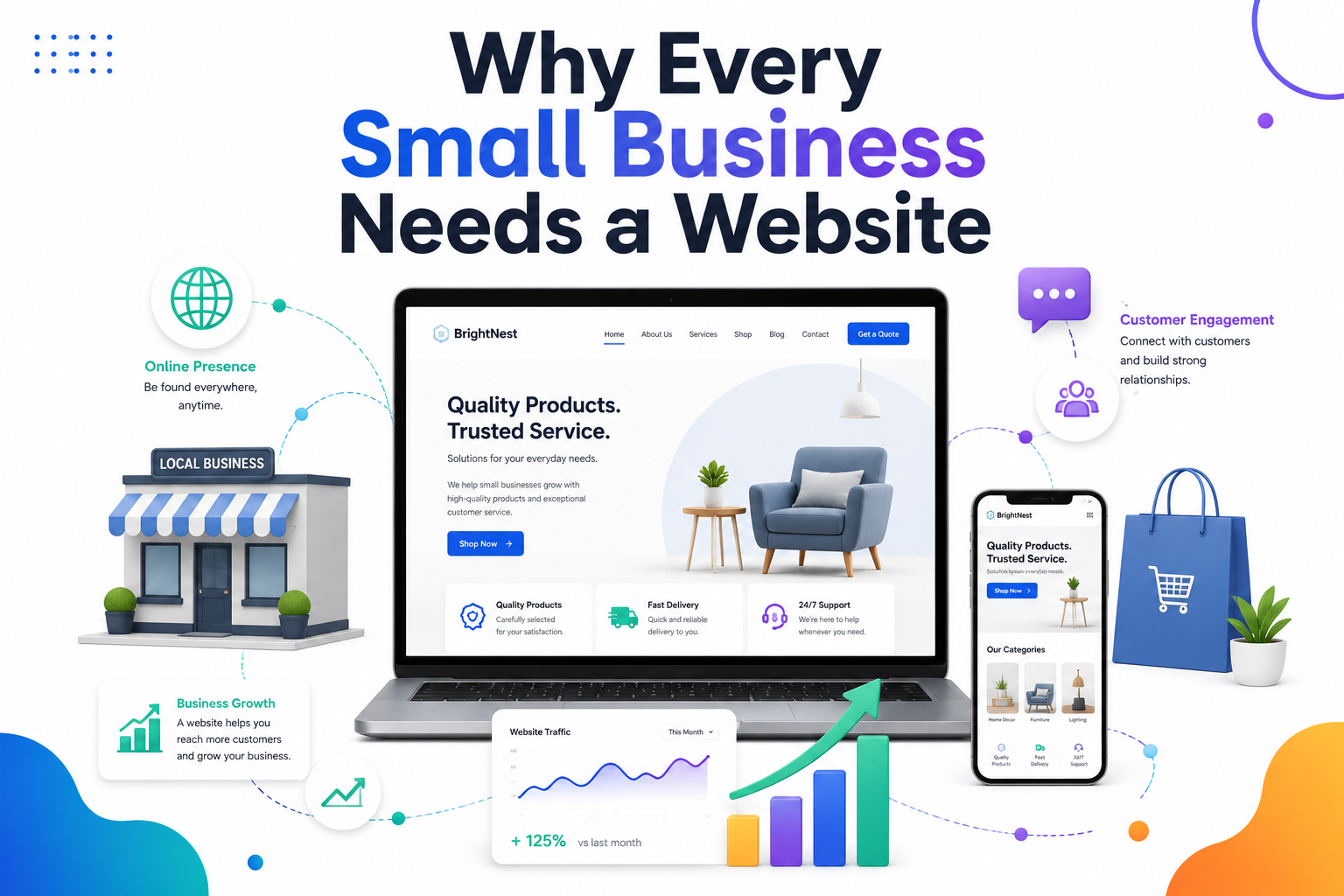
A Website Makes Your Business Look More Credible
There's a simple reality here: many customers trust a business more when it has a website. It's not about the website being fancy — it's about the signal it sends. A business that has taken the time to set up a proper website feels more permanent, more accountable, and more professional than one that only exists on social media.
This matters most when someone is deciding between you and a competitor. If they can't find much about you online, doubt creeps in. A website removes that doubt.
Your Business Is Available 24/7
Your shop has hours. Your website doesn't. While you're sleeping, customers can be learning about your services, reading your reviews, and deciding whether to contact you in the morning.
For businesses that sell products, a website can go further — customers can place orders at any time of day without needing to reach you directly. That's revenue you'd otherwise miss.
You Can Reach Customers Beyond Your Local Area
Social media can reach a broad audience, but without advertising, most of that reach is random. A website, especially one set up properly for search, can attract customers from specific locations — nearby towns, different neighborhoods, even other cities — who are actively searching for what you offer.
A wedding photographer in one part of the city can pick up clients from across the region. A food business can attract bulk orders from companies in different areas. This kind of reach isn't automatic, but a website makes it possible in a way that social media alone doesn't.
A Website Helps Customers Find You on Google
Search engines index websites. When someone types "shoe repair near me" or "best biryani in Hyderabad," Google scans websites to decide who to show. Businesses with websites — especially those with useful, well-organized content — have a real shot at appearing in those results.
This is called organic traffic: people finding you without you paying for an ad. Social media pages can appear in search results too, but they offer far less control and far less information than a proper website.
You Have Full Control Over Your Online Presence
Every platform you use has its own rules, and those rules can change. Instagram can alter what content gets shown. Facebook can restrict business pages. Platforms get less popular over time, or change their algorithms in ways that hurt your reach.
Your website belongs to you. You decide what it says, how it looks, and how it works. Nobody can limit your reach on your own site or shut down your page because of a policy update.
A Website Makes Marketing More Effective
If you run Instagram or Facebook ads, where do those ads send people? If the answer is your social media page, you're leaving a lot on the table. Ads perform better when they direct people to a website — specifically, a page that's designed to convert visitors into customers.
The same goes for SEO and email marketing. Every marketing effort you invest in works harder when there's a solid website behind it.
4. What Happens When a Small Business Doesn't Have a Website?
Potential Customers May Choose Competitors
A customer searching for your type of business doesn't see only you — they see everyone in your category. If a competitor has a clean website with clear services, photos, and reviews, and you only have an Instagram profile, the competitor has a significant advantage. Most customers will contact the business that made it easiest for them to learn what they need to know.
Your Business Can Appear Less Established
Customers don't always consciously think, "This business doesn't have a website." But it registers. A missing website can make a business feel newer or smaller than it is, which creates hesitation — especially for bigger purchases or ongoing services where trust matters.
You're Dependent on Third-Party Platforms
Right now, everything about your online presence — your followers, your posts, your contact history — lives on platforms you don't control. If your account gets flagged, suspended, or if the platform itself becomes less popular, your online presence could disappear overnight. A website is an asset that belongs to you and stays with you.
You Miss Opportunities to Generate Leads and Sales
Without a website, there's no place to collect contact details from interested customers, no way to let people book appointments automatically, and no way to convert a Google search into a sale. These aren't small gaps — they're lost revenue that adds up over time.
5. Is Social Media Alone Enough for a Small Business?
Social media has real strengths. It's where conversations happen, where you can show the human side of your business, and where content can spread quickly. Platforms like Instagram work well for showing products, sharing behind-the-scenes content, and building a community around your brand.
The problem comes when social media is the only thing. You don't own your follower list. You can't control the algorithm. You can't rank on Google. And you can't give customers a complete picture of your business in the way a well-built website can.
A website and social media work best together. Social media drives awareness and engagement. Your website captures that interest and turns it into customers. Each makes the other more effective.
6. What Information Should Every Small Business Website Include?
About Your Business
A short, clear description of who you are, how long you've been operating, and what makes you different. Customers want to know they're dealing with real people who know what they're doing.
Products or Services
List what you offer, with enough detail that customers can make a decision. Vague descriptions make people go back to Google. Specific descriptions — with prices where possible — help customers commit.
Contact Information
Your phone number, email, address (if relevant), and working hours. Make this easy to find. Don't bury it at the bottom of a page.
Customer Reviews and Testimonials
Real feedback from past customers does more to build trust than anything you say about yourself. Even three or four honest reviews on your website can significantly change how a new visitor feels about reaching out.
Frequently Asked Questions
If customers keep asking the same things — minimum order quantities, delivery times, whether you do custom work — answer those questions on your website. It saves everyone time and shows that you understand what your customers need to know.
Clear Calls to Action
Every page on your website should make it obvious what a visitor should do next. Call now. Send a message. Book an appointment. Request a quote. Don't make people guess.
7. Two Similar Businesses, Different Results
Picture two catering businesses in the same city. Both have similar menus, similar pricing, similar reputations among their existing customers.
Business A has an active Instagram account with good photos and regular posts. No website.
Business B has a website. It shows the full menu with photos, pricing tiers for different event sizes, a list of events they've catered, testimonials from past clients, and a simple contact form. They've also appeared on Google when people in the area search for catering services.
A company planning an office event searches "catering for corporate events" on Google. Business A doesn't appear. Business B comes up, the office manager visits the website, sees everything they need, and sends an inquiry.
Business A didn't lose because their food was worse. They lost because they weren't visible where the customer was looking, and they didn't give that customer the information they needed to feel confident.
That's what a website does — it makes sure you're present when customers are actively searching, and that they find enough to move forward.
8. Signs Your Small Business Needs a Website Right Now
- Customers frequently ask for information you've already shared on social media, because they can't find it easily
- You're relying entirely on Instagram, Facebook, or WhatsApp to reach new customers
- Competitors in your category have websites and show up on Google when you search your own service
- You want more leads but aren't sure where they should come from
- Customers have trouble finding basic details about your business, like your hours or location
9. Frequently Asked Questions
Is a website necessary for a small local business?
Yes. Even if most of your customers come from the same neighborhood, a website helps them find you, verify that you're operational, and get the information they need before reaching out. It also opens the door to customers from nearby areas who discover you through search.
Can social media replace a website?
Not fully. Social media is great for staying visible and engaging with people who already follow you. But it can't be indexed by Google the way a website can, it doesn't give you full control over your content, and it doesn't provide the same level of detail that many customers want before making a purchase decision.
Does a small business website have to be expensive?
No. There are website platforms that make it possible to build a decent site without significant cost or technical knowledge. The investment is more about time than money, especially when you're starting out. A simple, well-organized website beats a complicated or expensive one that's hard to navigate.
Can a website help generate more customers?
Yes — particularly through search. When your website is set up correctly and contains useful information, it can show up when people in your area search for services like yours. That means customers are finding you without any ad spend.
What are the main benefits of having a website?
It makes your business easier to find, builds credibility with new customers, keeps your information available at all times, gives you full control over how your business is presented, and supports every other marketing effort you put into your business.
10. Conclusion
Customers today expect to be able to find a business online and get their questions answered before they reach out. A website is how you meet that expectation.
It builds trust, makes your business easier to find, and creates a foundation that no social media platform can provide on its own. Whether you're a one-person operation or a growing team, a website isn't anupgrade — it's a basic part of how businesses operate and attract customers now.
If you don't have one yet, the opportunity cost is real: every day without a website is a day potential customers are finding someone else instead.
Build a Premium Small Business Website with AMVIZ
Our design engineering team builds fast, search-optimized websites that establish credibility and scale your leads automatically.